
I-95/495 Capital Beltway – Inner Loop

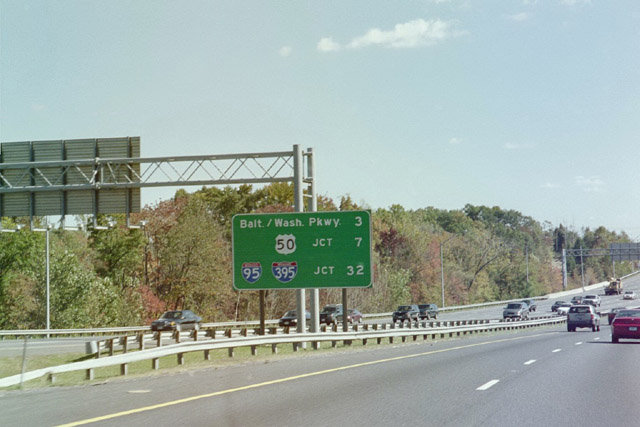
Removed by 2007, this mileage sign stood within the median of I-95/495 just ahead of U.S. 1 (Exit 25). 10/15/01
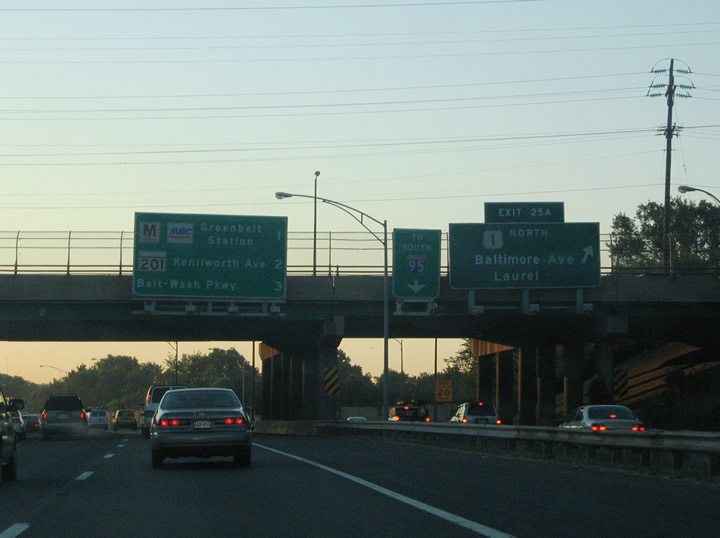
Former bridge mounted overheads, including a button copy panel for U.S. 1 north, at Exit 25 in College Park. 06/17/05
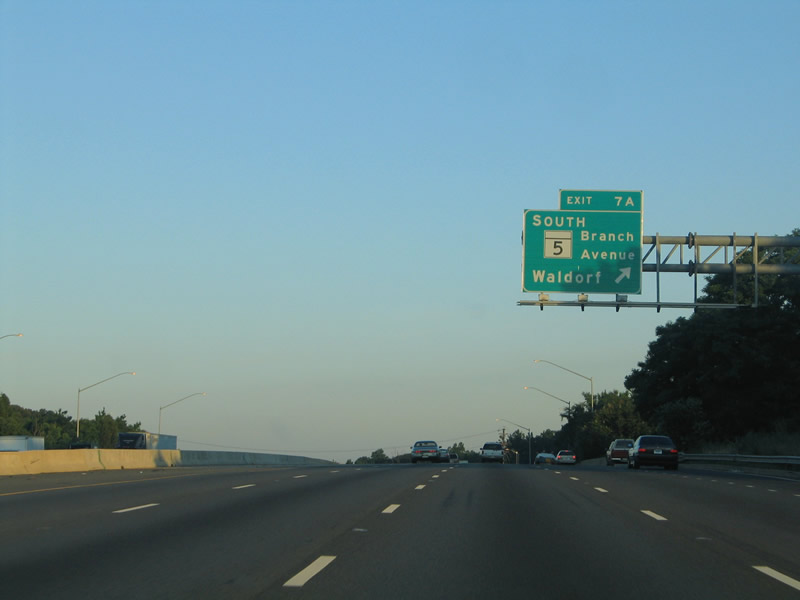
The former loop ramp (Exit 7A) for MD 5 south from I-95/495 south. 06/17/05
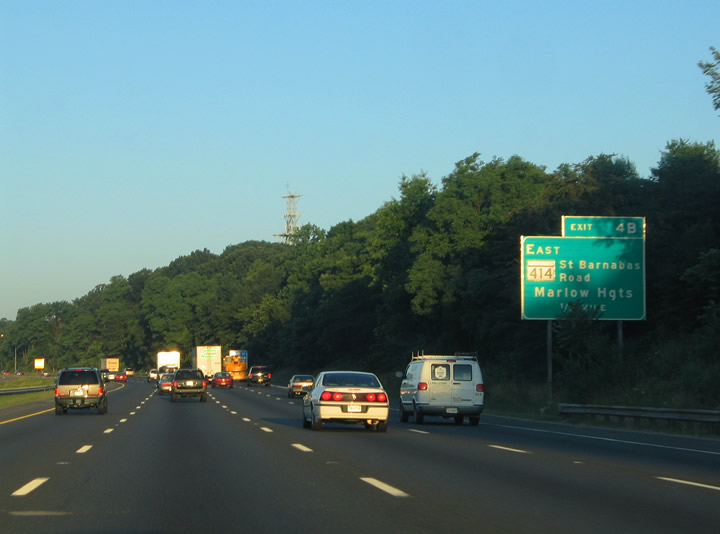
06/17/05
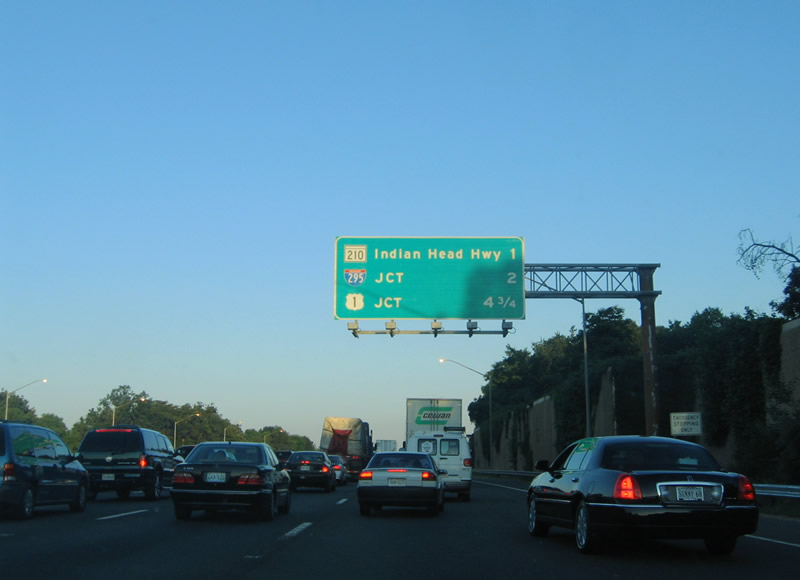
Heavy traffic congestion resulted from the road work associated with the Capital Beltway rebuild from Forest Heights westward to Alexandra, Virginia, including the redesign of the interchange with Interstate 295 and Woodrow Wilson Memorial Bridge replacement project. Exit 3 (MD 210) and 2 (I-295) represent the last Maryland off-ramps. Since this photo was taken, I-95/495 now partition into through and local roadways midway between MD 414 and MD 210. 06/17/05
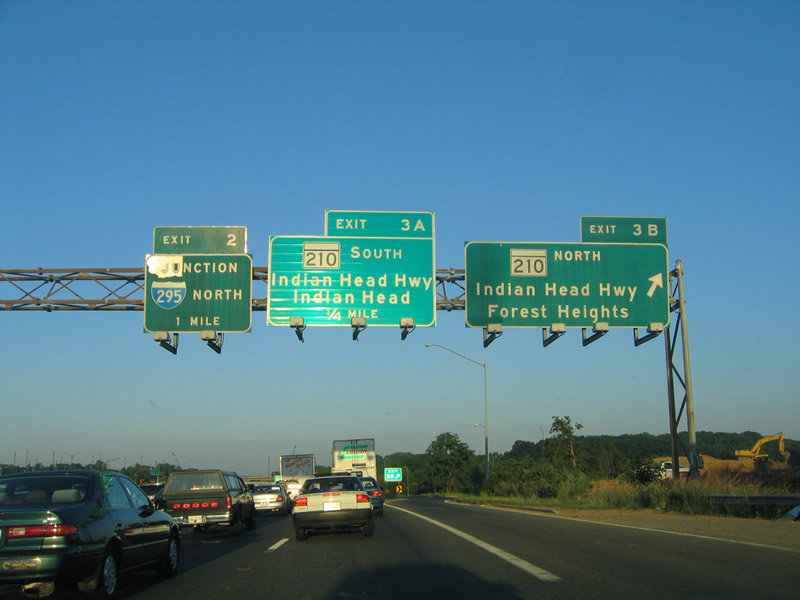
A full-cloverleaf interchange once joined Interstates 95 & 495 with Maryland 210 (Indian Head Highway) at Forest Heights just south of Washington. This junction was reconfigured during the Woodrow Wilson Bridge Replacement Project and now all movements to Maryland 210 depart in unison. 06/17/05
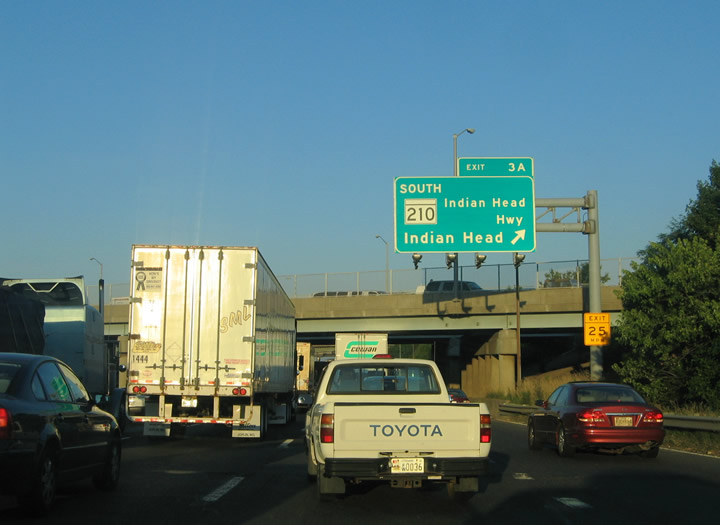
A look at the former loop ramp from Interstates 95 & 495 inner onto Maryland 210 (Indian Head Highway) south. Rechristened Exit 3, traffic to Maryland 210 now departs a lone ramp from the local lanes of Interstates 95 & 495 south. The new ramp follows a portion of the foot print of the original ramp, but it provides a smoother transition to Maryland 210, with a traffic light added at its end for southbound motorists. 06/17/05
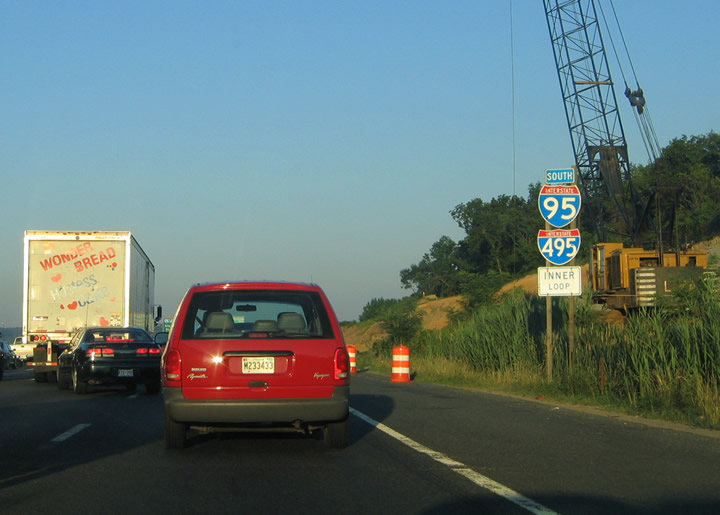
Reassurance shields posted for Interstates 95 & 495 within the construction zone between Exits 3 and 2. The Capital Beltway continues westward along side the National Park Service Oxon Hill Farm at Forest Heights toward the Woodrow Wilson Memorial Bridge across the Potomac River. Construction between 2002-09 involved replacing the original Woodrow Wilson Bridge with two new six-lane structures. Associated with the work were upgrades to interchanges with Maryland 210, Interstate 295, U.S. 1, and Virginia 241. 06/17/05
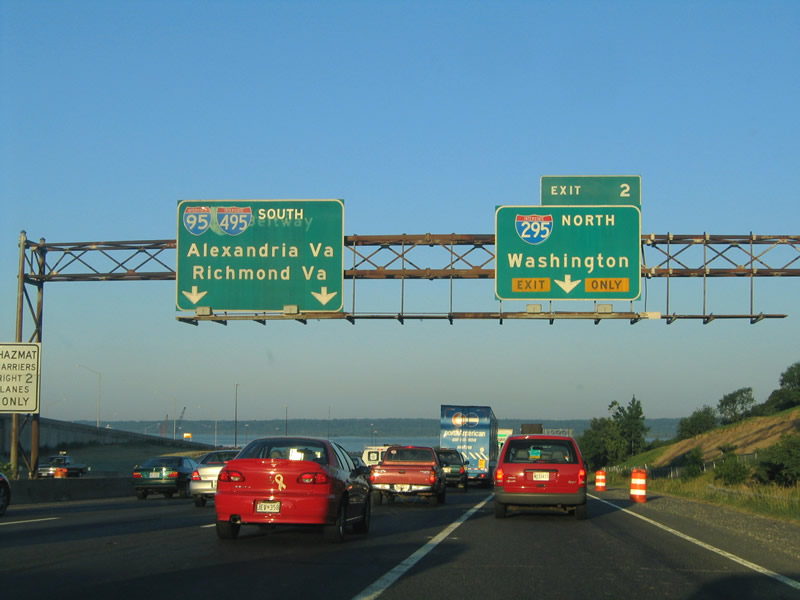
Interstates 95 & 495 meet the southern terminus of Interstate 295 just east of the river at Exit 2. Travelers bound for Interstate 295 north must use the new local lanes of the Capital Beltway. The former directional cloverleaf interchange was upgraded to include high flyovers between Interstate 295 and the Maryland 210 connector at Oxon Hill and new ramps to the National Harbor development to the south. 06/17/05
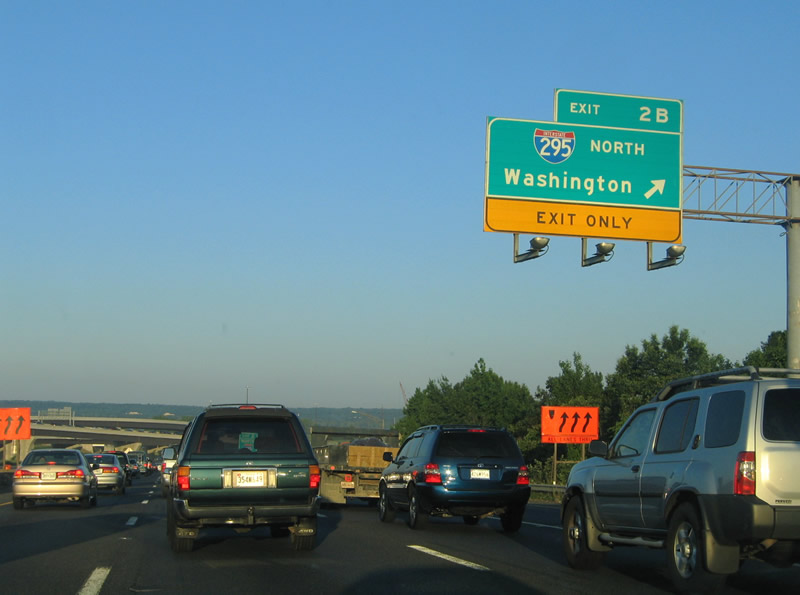
Now renumbered as Exit 2B, the northbound beginning of Interstate 295 departs Interstates 95 & 495 inner for Bolling Air Force Base, the Anacostia Naval Annex, and downtown Washington. Connections with unsigned Interstate 695 lead drivers west to Interstate 395 and the U.S. Capitol. Exit 2A connects with National Harbor Boulevard south via a new loop ramp from the local lanes. 06/17/05
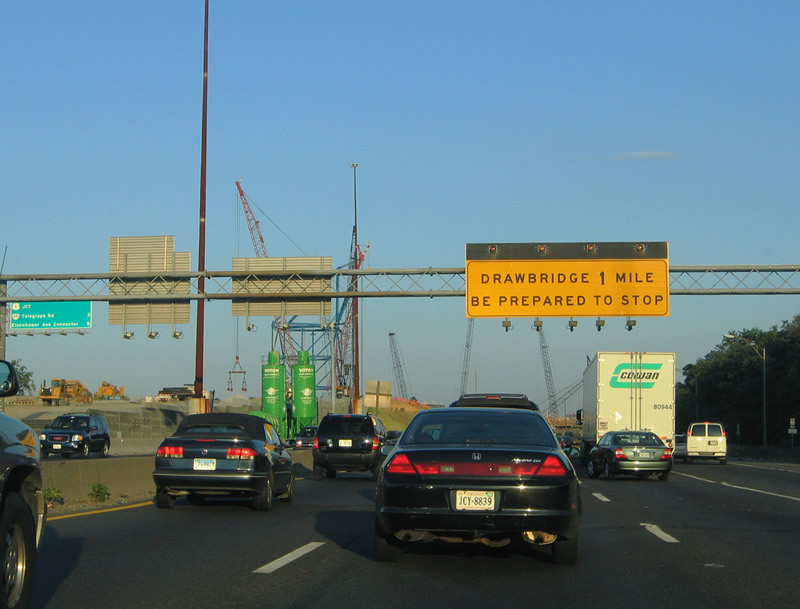
Leaving the original interchange with Interstate 295, Interstates 95 & 495 south draw to within one mile of the Woodrow Wilson Memorial Bridge original draw span. Note the new mileage sign pictured above to the left. 06/17/05
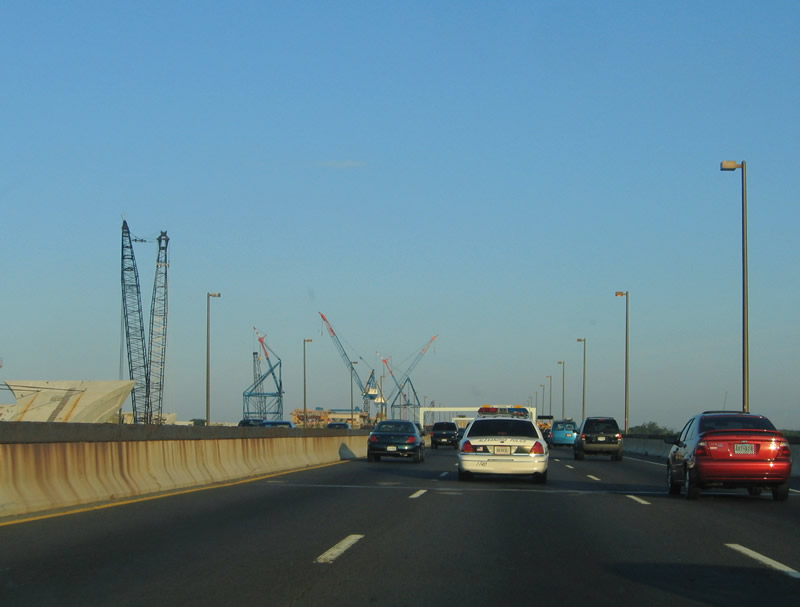
The original Woodrow Wilson Memorial Bridge carried just six lanes of overall travel with no full shoulders. 06/17/05
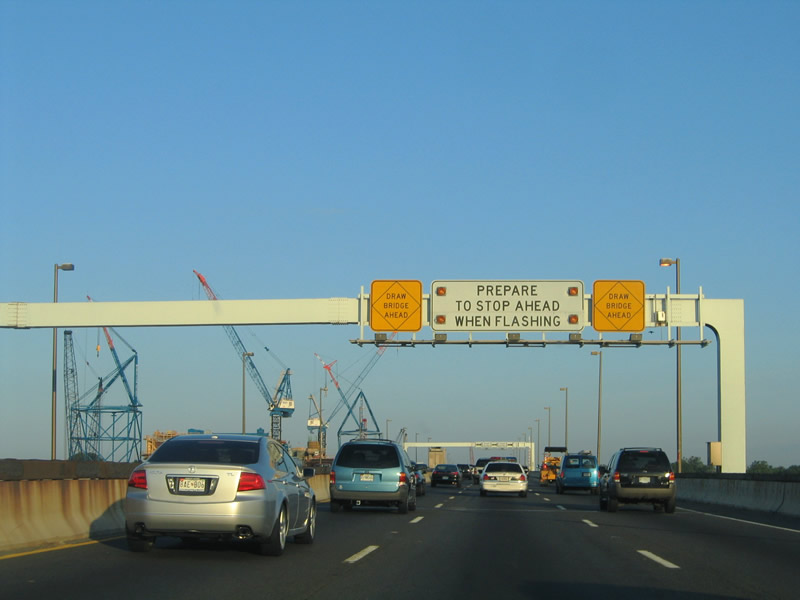
The new Woodrow Wilson Bridge is 12 lanes wide but is striped for ten. 06/17/05
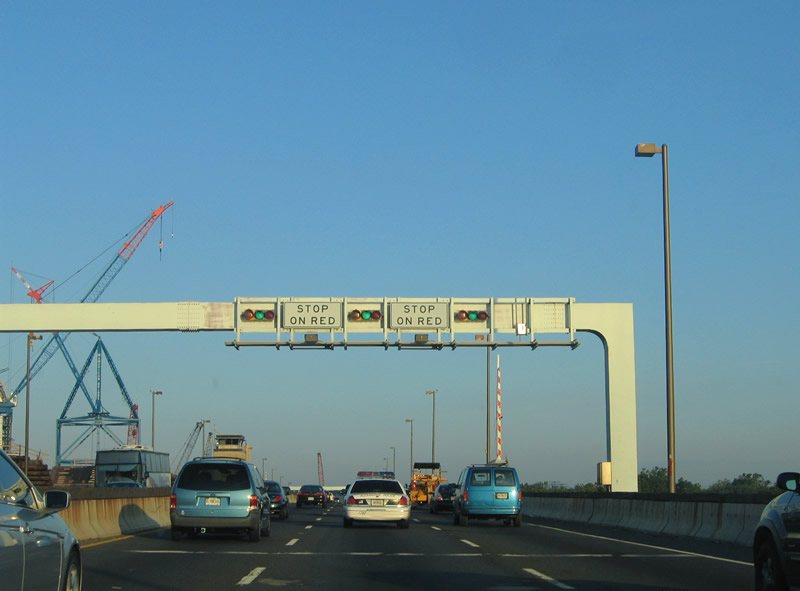
The new Woodrow Wilson Bridge lanes are configured in an Express/Local configuration, so that through traffic uses the inner most two lanes and local traffic uses the outer most three lanes. 06/17/05
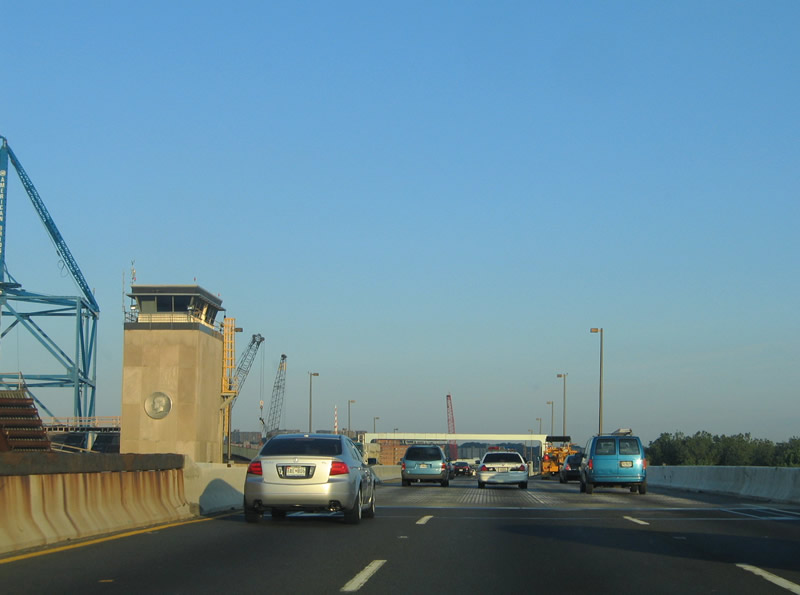
The control tower for the new Woodrow Wilson Bridge 06/17/05
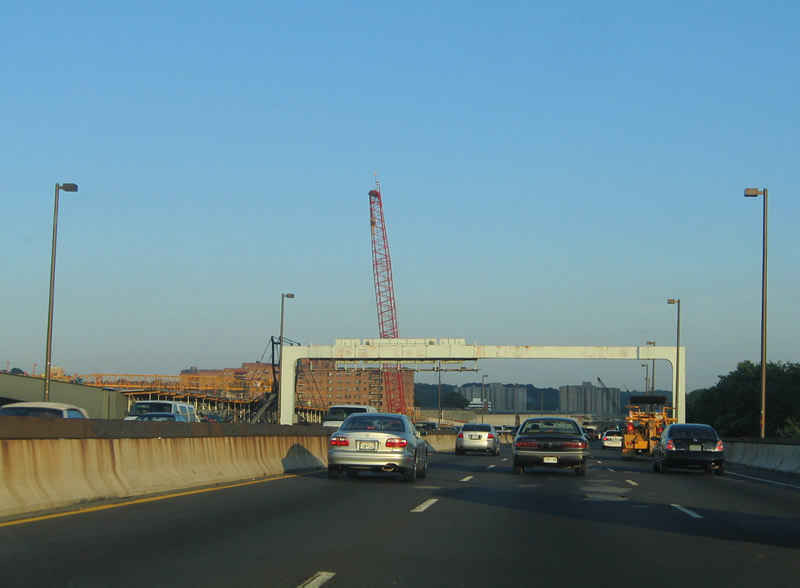
The left lane of the new Woodrow Wilson Bridge is reserved for high occupancy vehicles and/or buses, but it may also be used for light rail in the future. 06/17/05
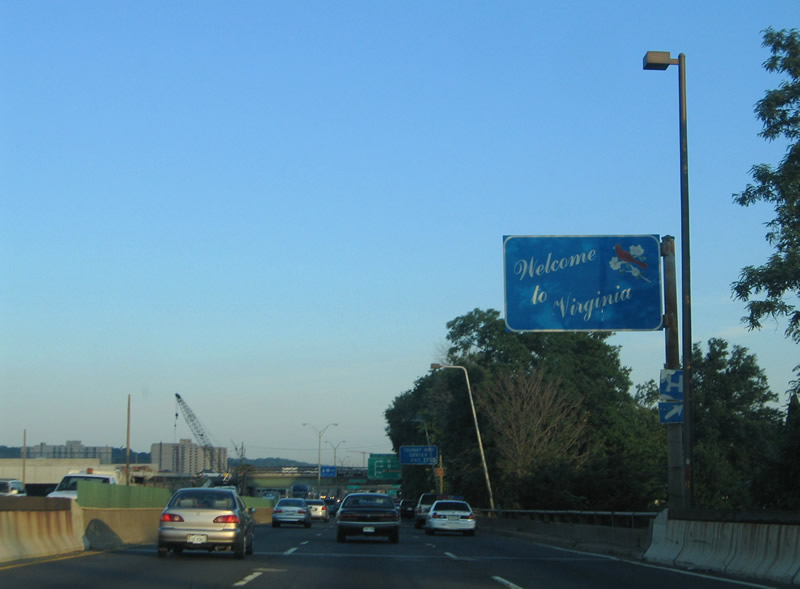
Virginia welcome sign over the original Woodrow Wilson Bridge westbound. 06/17/05
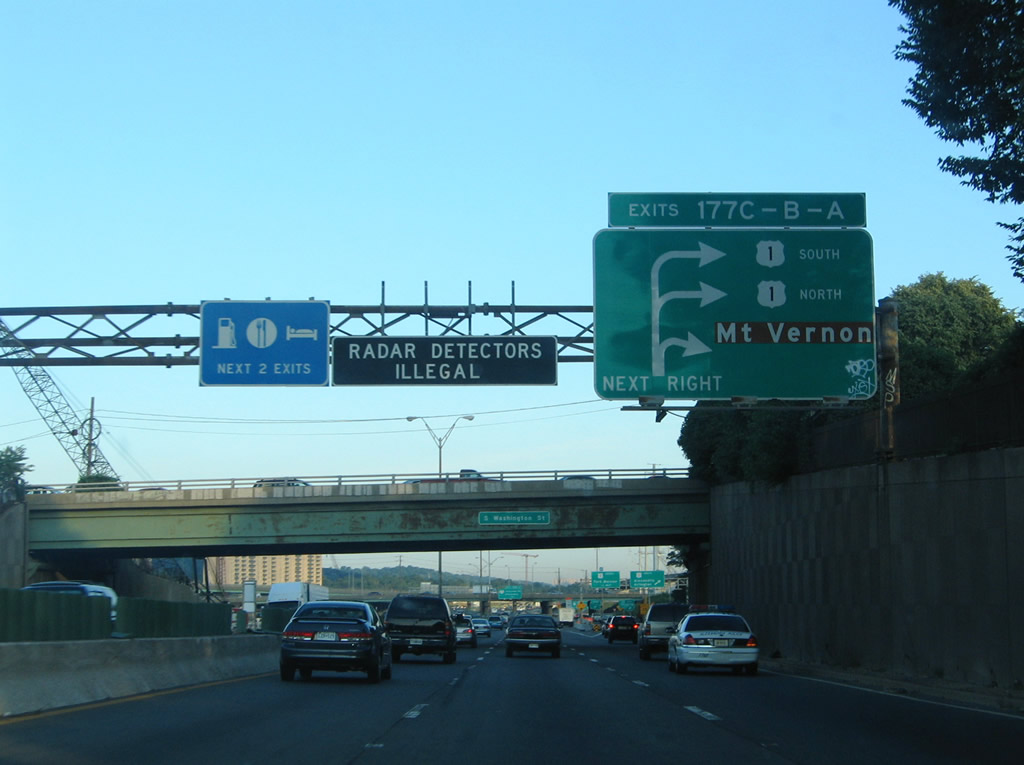
Originally a collector/distributor roadway departed the Interstates 95 & 495 (Inner) westbound mainline at Exit 177 for Washington Street (Virginia 400) and U.S. 1 (Richmond Highway). The c/d roadway carried traffic from U.S. 1 westbound onto the Capital Beltway as well. This interchange was reconfigured during the Woodrow Wilson Bridge Replacement Project and now all movements depart from the mainline of the local lanes. 06/17/05
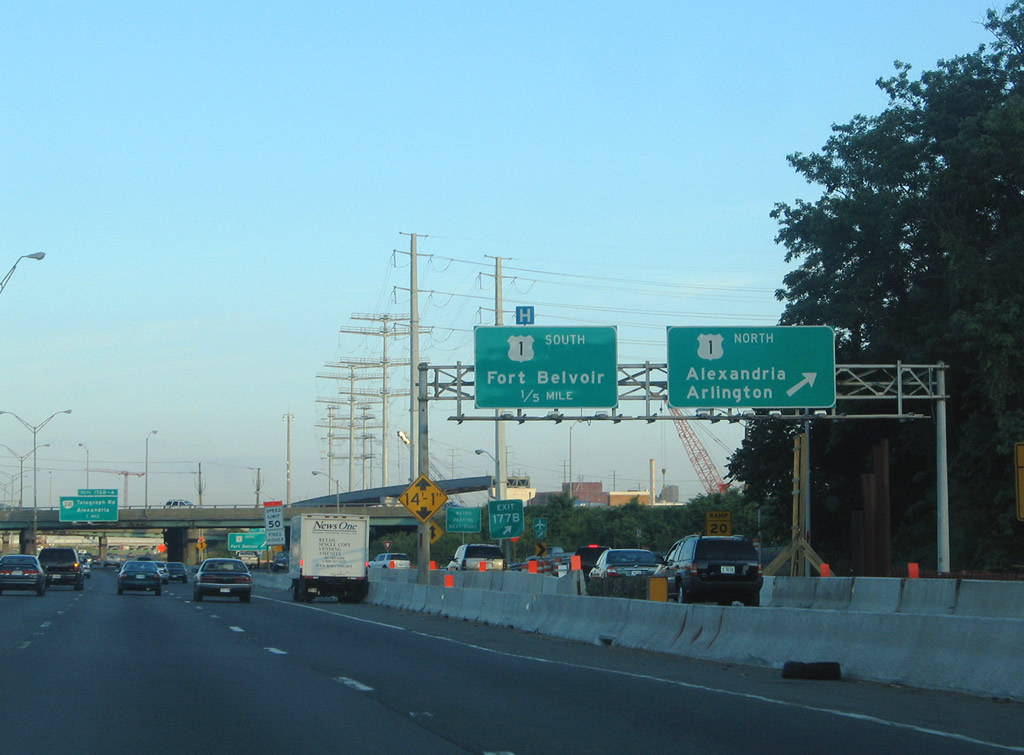
U.S. 1 follows Patrick Street north to a carriageway split with Henry Street through downtown Alexandria. Virginia 400 (Washington Street) parallels the US route three blocks to the east between respective ends of the George Washington Memorial Parkway. Exit 177A now departs independent of Exits 177C/B. 06/17/05
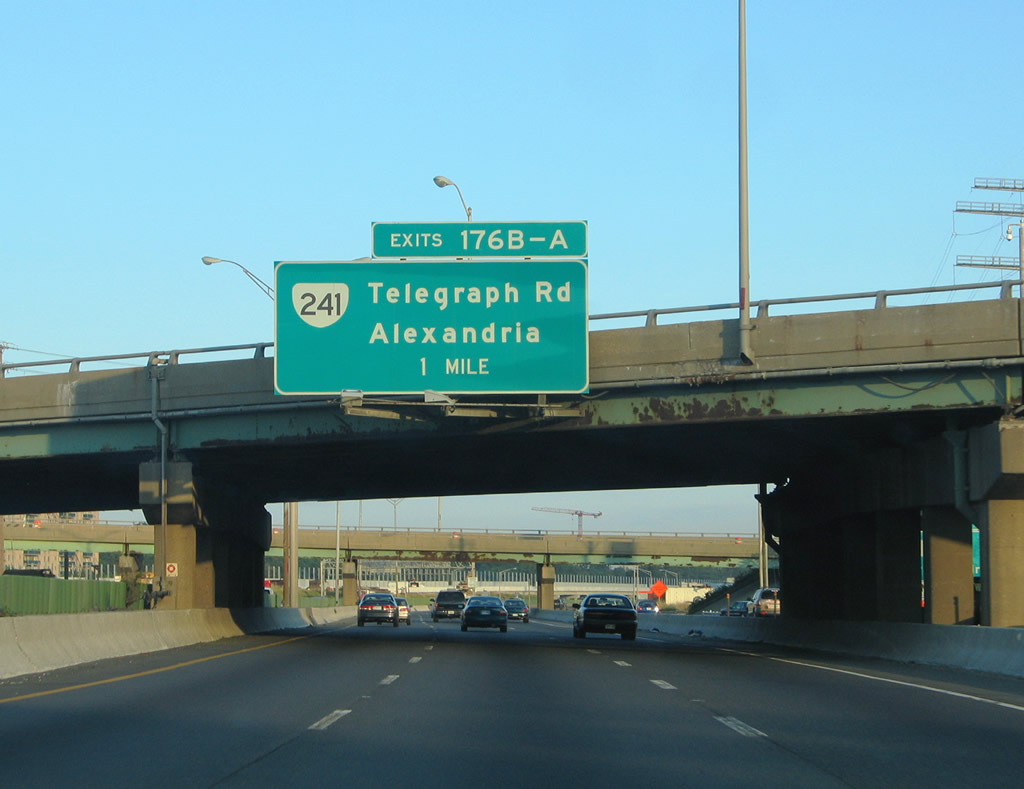
I-95/495 advanced west to a directional cloverleaf interchange (Exit 176) with Telegraph Road (Virginia Route 241). 06/17/05

Exit 176B connects the local lanes of I-95/495 with SR 241 (Telegraph Road) north to the George Washington Masonic National Memorial and Eisenhower Avenue near the Metro Yellow Line station. 07/01/05

SR 241 runs 1.88 miles north from U.S. 1 (Richmond Highway) to a trumpet interchange with SR 236 (Duke Street) in Alexandria. 07/01/05

07/01/05

A loop ramp carries drives from the local lanes of I-95/495 west onto SR 241 (Telegraph Road) south at Exit 176A. 12/26/06

I-95/495 next approached the Eisenhower Avenue Connector (Exit 174). 06/17/05

The Local and Through roadways of the Capital Beltway merge ahead of the diamond interchange (Exit 174) with the Eisenhower Connector. 06/17/05

Exit 174 departed Interstates 95 south & 495 west for Eisenhower Avenue west to VA 401 (Van Dorn Street) and east to Telegraph Road in south Alexandria. 06/17/05
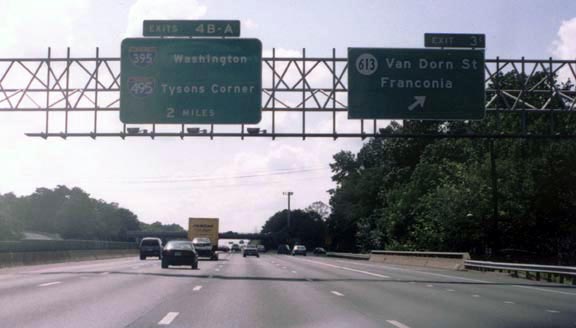
Before 2001, the Van Dorn Street off-ramp was signed as Exit 3. The exit numbering system of the Capital Beltway saw numbers increase from the Potomac River westward along the Inner loop and decrease along the Outer loop. Interstate 95 mileage based exit numbers did not begin until the route departed the beltway at Springfield. 08/12/00
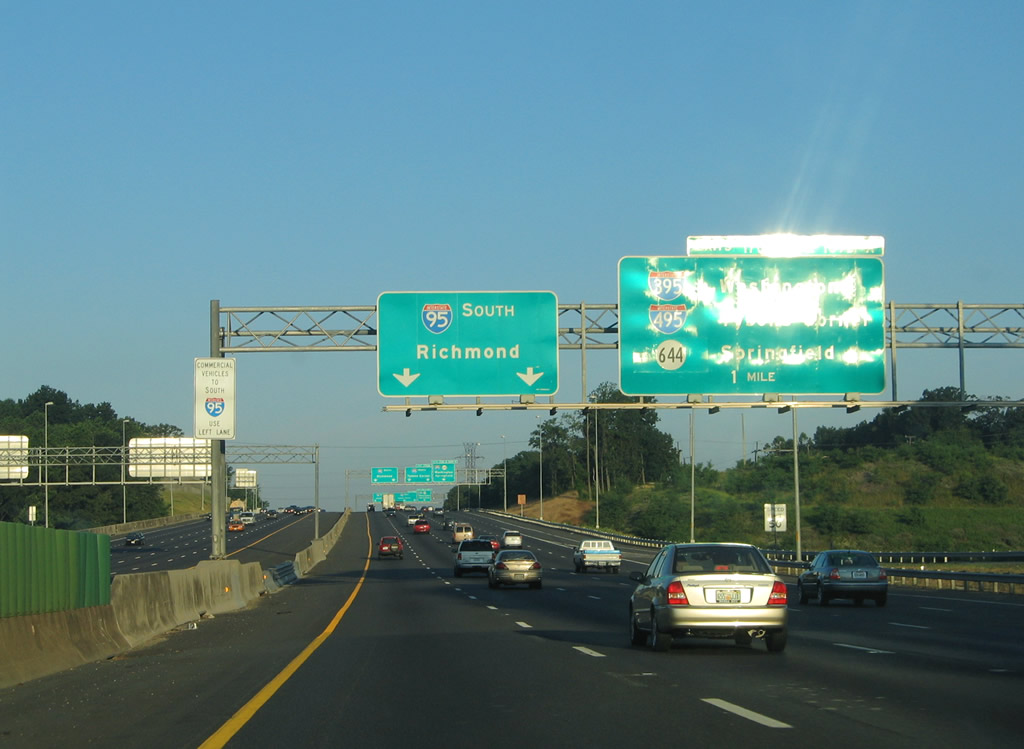
Older guide signs posted above I-95 south & 495 west for the Springfield Interchange. Interstate 95 once used a cloverleaf ramp to continue southward from the Beltway. That movement was replaced with a two-lane high speed flyover. 06/17/05
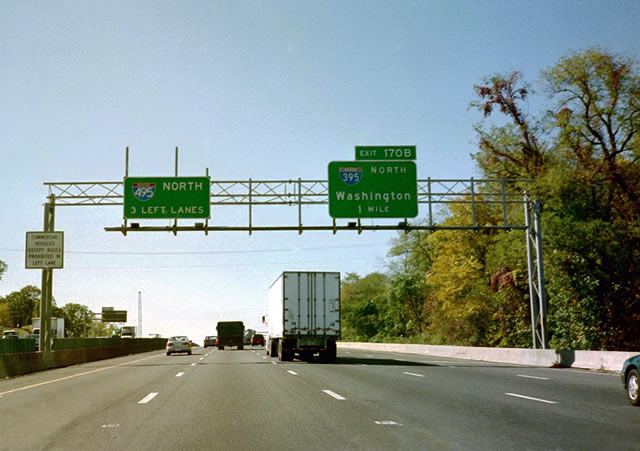
A look at the previous sign bridge posted on the one mile approach to the Springfield Interchange. A directional-cloverleaf interchange handled movements originally. 10/14/01

This sign bridge for Exit 170 displayed the northern Virginia control points of Springfield for Interstate 95 south and Arlington for Interstate 395 north. The beginnings of the new flyover ramps took place in this westward looking scene. 10/14/01
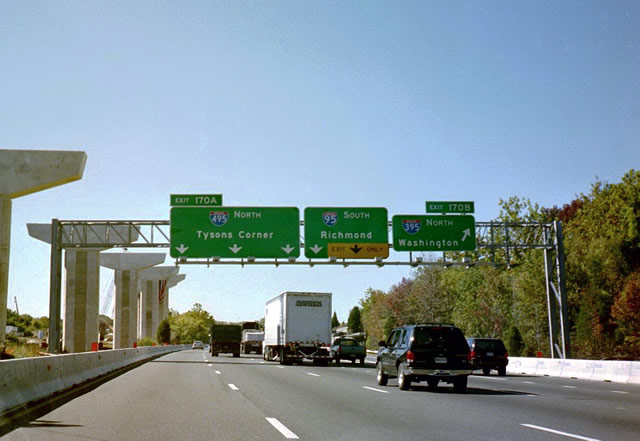
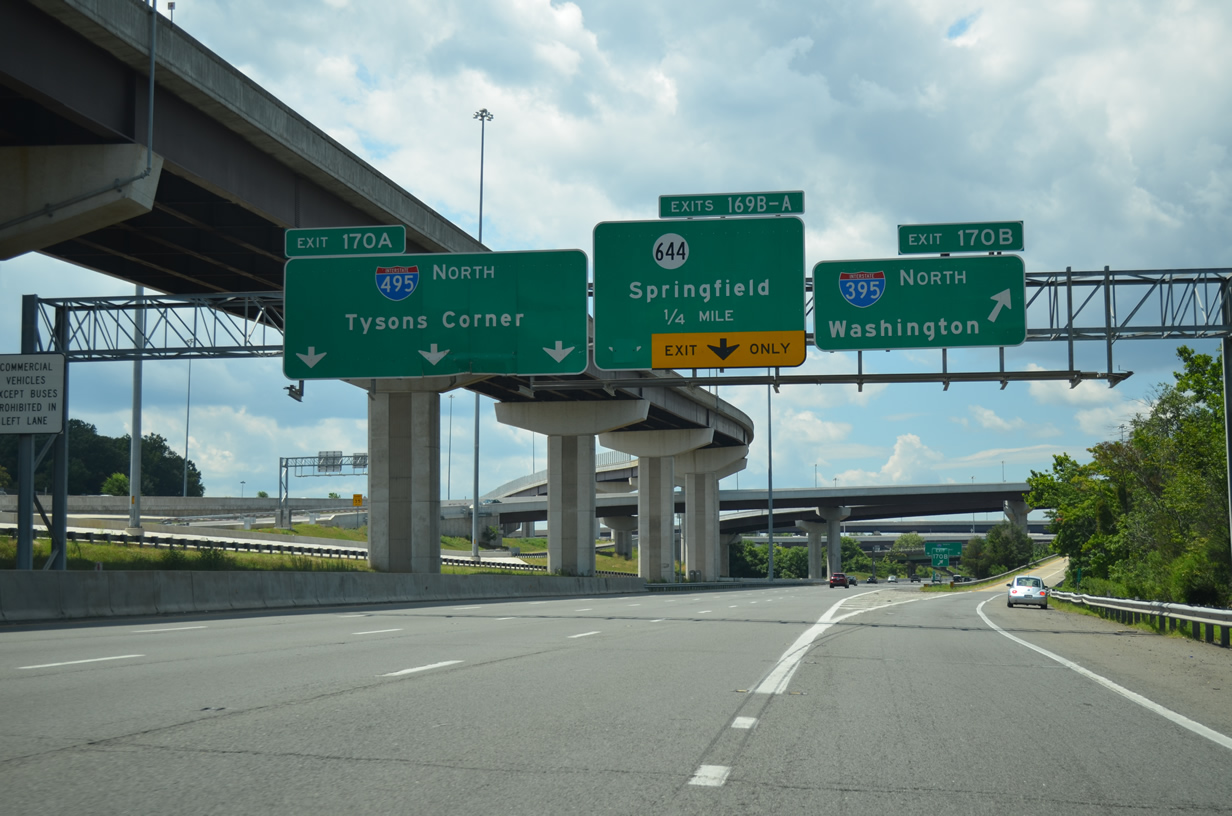
A look at the previous configuration of the Interstate 395 (Henry G. Shirley Memorial Highway) northbound departure from the Capital Beltway via Exit 170B. Interstate 395 provides a 13.39 mile long freeway through Alexandria, Arlington, the Pentagon vicinity, and downtown Washington, D.C. The freeway continued the HOV-2 reversible lane system of Interstate 95 northward toward the Potomac River. 10/14/01

Interstate 95 used to leave the Capital Beltway via a two lane directional ramp. This ramp was overwhelmed at most times of the day due to the volume of traffic at the Springfield Interchange. The substandard nature of the ramp was one of the main reasons for upgrading the exchange. 10/14/01
08/04/13
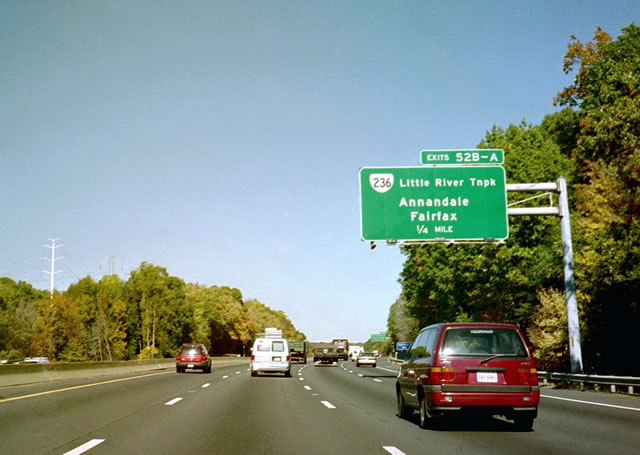
Interstate 495 northbound within the vicinity of Wakefield Park, one half mile south of the Virginia 234 (Little River Turnpike) full-cloverleaf interchange. Virginia 234 comprises an east-west arterial between the cities of Fairfax and Annandale. 10/14/01
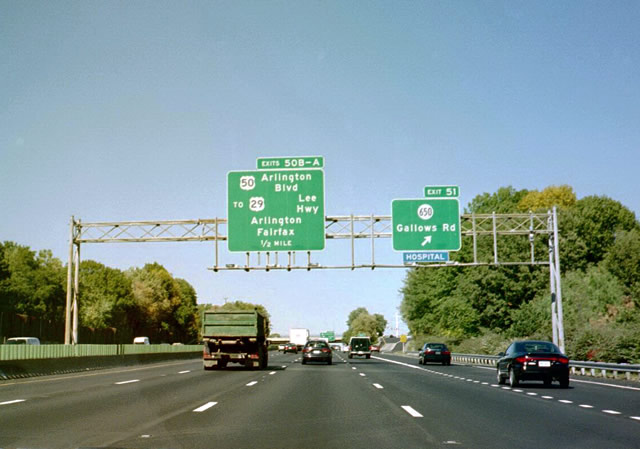
Virginia Secondary 650 (Gallows Road) intersects the Capital Beltway via a partial cloverleaf interchange at Exit 51. Gallows Road travels north from Virginia 244 (Columbia Pike) at Annandale to Virginia 7 (Leesburg Pike) at Tysons Corner. 10/14/01
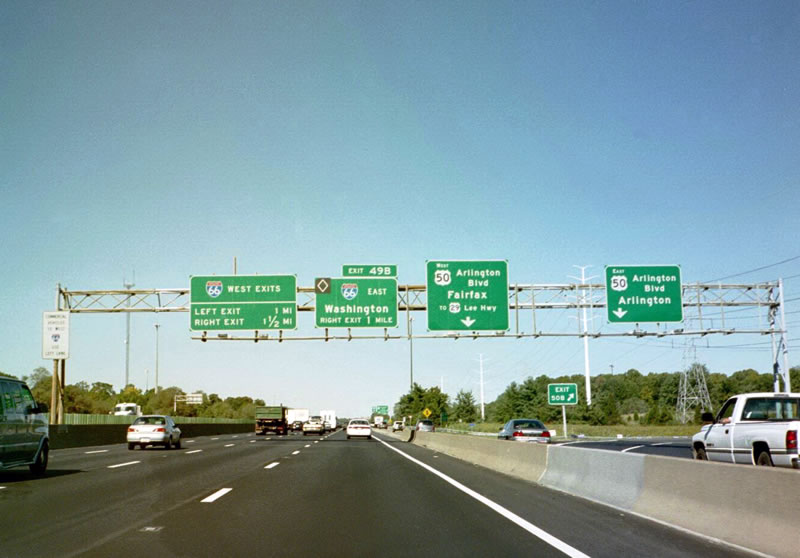
A collector/distributor system handles the movements at the cloverleaf interchange with U.S. 50 (Arlington Boulevard). The exchange lies adjacent to the U.S. 50 interchanges with Fairview Park Drive and Gallows Road. This configuration was vastly unchanged with the addition of the express toll lanes in the middle of Interstate 495. 10/14/01

Five lanes of the Capital Beltway traveled underneath U.S. 29 (Lee Highway), one half mile south of Interstate 66. Two ramps connected the beltway northbound with I-66 westbound. A left-hand ramp departed in one half mile and a loop ramp followed beyond the off-ramp (Exit 49B) to Interstate 66 east. 10/14/01

A former state-named shield for Interstate 495 north. Capital Beltway trailblazers were installed in the early 1990s indicating Inner and Outer cardinal directions. However the concept apparently never caught on with motorists, as most of the assemblies were removed in the ensuing decade. 10/14/01

Traffic to Interstate 66 eastbound diverged from the Capital Beltway via Exit 49B. Since converted to a toll road, the freeway (Custis Memorial Parkway) was an HOV-2 facility from Interstate 495 eastward into Washington, D.C. The HOV enforcement affected all six lanes of the freeway and was enforced during the morning and evening commutes for the respective direction of heavy travel. This interchange remains vastly the same in its handling of movements between I-66 and 495 though additional ramps were added for the 495 ExpressLanes. 10/14/01
Photos by AARoads, Carter Buchanan (08/12/00, 07/01/05)
Page Updated Friday January 24, 2025.